


A website’s name rarely tells its whole story. Zingyzon.com is a good example.
Its current About page describes a home-focused publishing website. It covers home improvement, appliances, gardening, kitchen essentials, and home technology. That makes a website profile the appropriate starting point. A personal biography would misidentify the subject. zingyzon.com
Yet its wider content presents a more complicated picture. The blog archive includes technology, business, health, and travel categories. Readers can therefore encounter different subjects under the same website name. ZingyZon.com
Understanding that range helps answer the useful questions. What does Zingyzon publish? Who might find it helpful? Which details deserve further checking?
This guide examines those questions using the website’s public pages. It separates its stated purpose from independently established credentials. It also explains how to approach its buying guides.
Zingyzon.com at a Glance
| Field | Verified information |
|---|---|
| Website name | Zingyzon.com |
| Website type | Content and guide website |
| Current stated focus | Home improvement, appliances, garden living, and home technology |
| Other visible categories | Technology, business, health, travel, and general topics |
| Intended audience | Everyday readers; the homepage also addresses Australia and USA audiences |
| Founder and launch date | Not established by the pages reviewed |
| Awards and audience size | Not independently verified |
| Contributor opportunities | Public submission guidelines are available |
The profile above draws on the homepage, About page, archive, and contributor guidelines. ZingyZon.com
What Does Zingyzon.com Publish?
The current About page emphasizes practical household information. Its listed subjects include decor, cleaning, organization, outdoor living, and connected devices. The stated aim is to explain these subjects simply. zingyzon.com
For readers, that suggests an introductory role. A guide can help identify options before a purchase. It can also provide vocabulary for further research.
However, different article types need different evidence. A decorating feature can offer ideas through photographs and examples. An appliance comparison needs specific models and measurable differences. A repair guide needs accurate instructions and clear limits.
Treating every article as equally authoritative would overlook those differences.
The broader archive also matters. Its categories extend beyond the home. A reader arriving through a technology article might see another side of the publication. The category and article itself provide better context than the brand name alone. ZingyZon.com
Home and Garden Ideas
The Home & Garden category describes interior inspiration, DIY projects, gardening, and outdoor living. These subjects suit readers gathering ideas for their spaces. ZingyZon.com
Use inspiration as a starting point. A room photograph cannot establish installation costs. A garden suggestion may need adjustment for climate or soil.
Before applying an idea, consider your own constraints. Measure the space. Check maintenance needs. Decide whether the project requires professional help.
That process turns a general article into useful planning material.
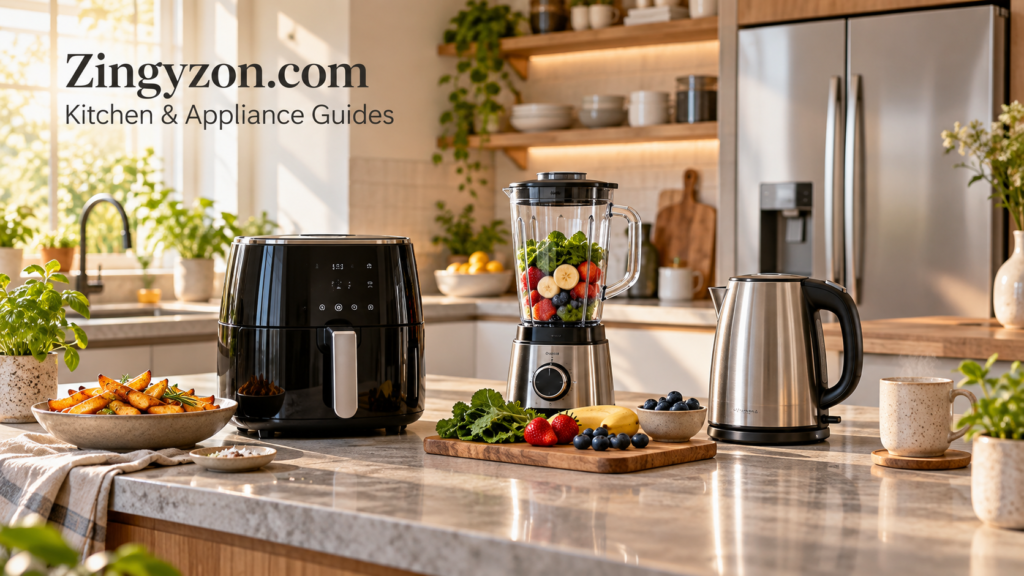
Kitchen and Appliance Guides
Zingyzon publishes articles about everyday small kitchen appliances. One guide discusses kettles, blenders, air fryers, and rice cookers. Its central advice is to choose tools around repeated tasks. Zingyzon
This is a useful question before shopping: what job needs solving?
Someone making daily smoothies has different needs from an occasional baker. A compact kitchen also changes the decision. Counter space, storage, and cleaning effort can matter as much as features.
A helpful buying guide should make these tradeoffs visible. Readers should still confirm specifications for the exact product.
What the Published Dates Actually Tell Us
Individual articles provide a limited view of publishing activity.
For example, the energy-efficient appliance guide displays June 15, 2026, as its publication date. It also displays a July 15 update. The small-apartment appliance guide shows June 19 publication and July 15 revision dates. ZingyZon.com
These are dates shown by the website. They do not establish its founding year.
The distinction prevents an easy reporting mistake. A dated post confirms a displayed article timestamp. It does not prove when the business began operating.
An update label also leaves another question open. What changed?
For buying content, meaningful updates might address discontinued products or revised specifications. Readers benefit when publishers explain those changes.
A recent timestamp deserves attention. The content beneath it still needs examination.
Who Might Find the Website Useful?
The homepage explicitly addresses readers in Australia and the United States. It also describes a global audience. Those statements identify intended readership, rather than verified traffic distribution. ZingyZon.com
The home-focused sections may suit people exploring household improvements. Students furnishing apartments could use them to organize questions. Homeowners comparing appliances could use them for initial orientation.
Regional relevance needs closer checking.
A recommendation available in one country may differ elsewhere. Model names, warranties, prices, and retailer stock can change. Electrical compatibility also deserves confirmation before ordering.
Look for a clearly identified market within each article. A country mentioned on the homepage does not settle every product question.
Useful regional guidance should connect its advice to local details.

How to Assess Its Credibility
Credibility comes from evidence readers can inspect.
Start with authorship. An appliance article reviewed here uses the byline Team Admin. That identifies a publishing label, but the label alone establishes no testing qualification. ZingyZon.com
Next, examine how recommendations were produced. Does the article describe direct testing? Are original photographs included? Does it distinguish research from personal experience?
Google’s published guidance encourages clear authorship and explanations of content production. For product reviews, it highlights testing methods, results, and supporting evidence. developers.google.com
These questions offer a practical assessment method. They apply to Zingyzon and other publishers alike.
A detailed guide may contain useful information without firsthand testing. The reader should be able to recognize that distinction.
Commercial Disclosures and Privacy
Zingyzon’s privacy policy says it may display advertising, sponsored-style content, or affiliate links. It also describes possible collection of technical information and contact details. Zingyzon.com – ZingyZon.com
Commercial relationships deserve consideration when reading recommendations.
Look for disclosures near relevant links. Compare the suggested product with alternatives. Check whether the article explains weaknesses alongside benefits.
A privacy policy provides information about stated practices. It does not independently certify website security.
Contributor Guidelines
The contributor page welcomes several subjects beyond home content. It requests original, fact-checked articles exceeding 1,000 words. It also permits one or two relevant backlinks at editorial discretion. ZingyZon.com
These are stated submission rules. They do not verify compliance across every published article.
For contributors, check the current guidelines before submitting. For readers, assess each article’s evidence and author background.
How to Use Its Guides Effectively
Begin with a specific question.
Perhaps you need an appliance for a narrow counter. Perhaps you want to understand energy labels. Define the problem before browsing.
Read the relevant guide fully. Record the features that affect your decision. Then verify those details against manufacturer documentation.
Zingyzon’s energy-efficiency article discusses ENERGY STAR and EnergyGuide labels. Readers can use those references as prompts for checking actual product information. ZingyZon.com
Separate ideas from instructions. Decorative inspiration invites experimentation. Electrical work and structural repairs require stronger technical assessment.
For expensive purchases, compare several sources. Check warranties and return terms directly. Save the exact model number rather than relying on a general product name.
The most useful outcome is a clearer decision process. A website guide should help you ask better questions.
Practical Takeaways
- Identify the subject: Zingyzon.com is a publishing website.
- Check each article: Examine authorship, evidence, and disclosures.
- Confirm product details: Verify specifications and regional availability.
- Use guides thoughtfully: Turn general advice into specific questions.
This article draws on publicly accessible website pages and published guidance reviewed on October 2, 2026. It is intended solely for educational and informational purposes. Website statements are attributed where relevant; founder details, audience figures, awards, and independent product-testing credentials were not verified.
Read more:Palina Rojinski Biography: From Rhythmic Gymnastics to German TV Stardom
