
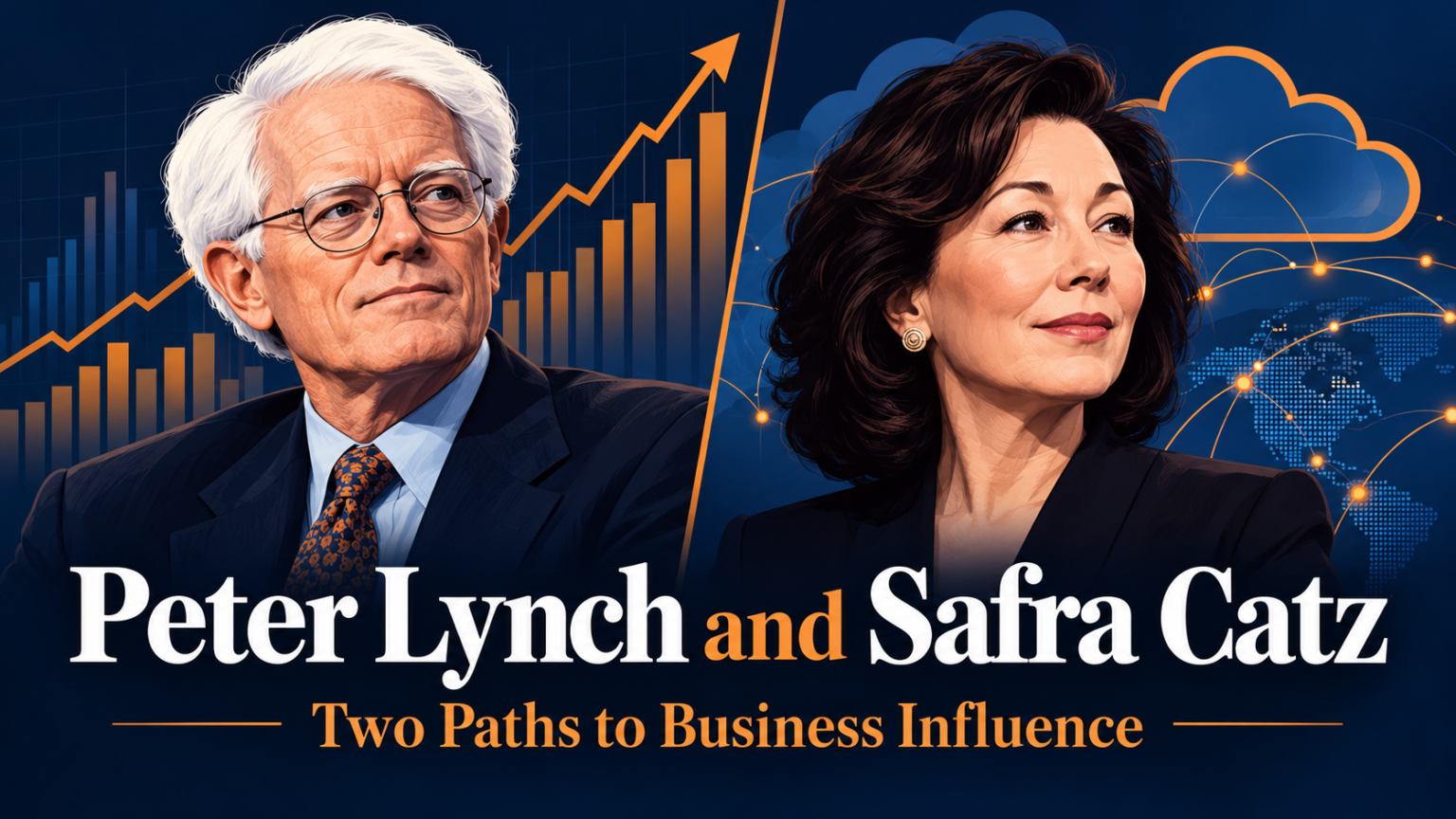

Peter Lynch and Safra Catz built influence through different decisions. Lynch selected businesses worth owning. Catz helped reshape a business from within.
Their names belong to separate chapters of American corporate history. Lynch became famous at Fidelity’s Magellan Fund. Catz became a powerful executive at Oracle.
Between 1977 and 1990, Lynch delivered 29.2% average annual returns. That record made him a widely studied investment manager. [Insert Forbes Reference Link Here] forbes.com
Catz joined Oracle in 1999 and became CEO in 2014. In September 2025, she moved to executive vice chair. [Insert Oracle Official Reference Link Here] sec.gov
No reliable source reviewed establishes a direct partnership between them. Their useful connection lies in business judgment, financial knowledge, and education.
This paired biography follows those connections without inventing a shared story. It examines how each developed expertise—and what their achievements actually mean.
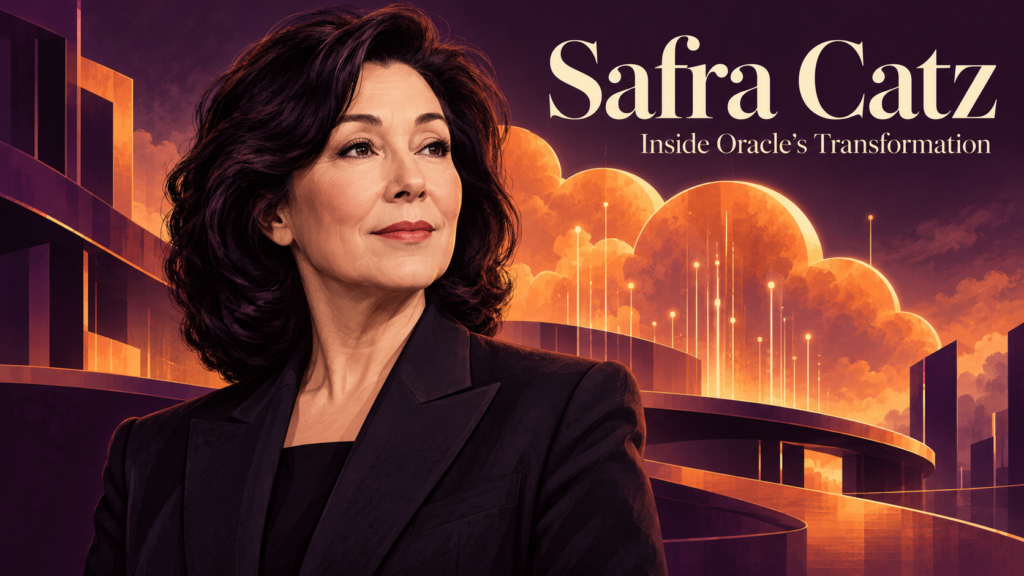
Peter Lynch and Safra Catz at a Glance
| Profile | Peter Lynch | Safra Catz |
|---|---|---|
| Full Name | Peter Lynch; university records identify Peter S. Lynch | Safra Ada Catz |
| Date of Birth | January 19, 1944 | December 13, 1961 |
| Place of Birth | Newton, Massachusetts, United States | Holon, Israel |
| Nationality | American | Israeli-born American |
| Key Profession | Investor, former fund manager, author, philanthropist | Technology executive and former investment banker |
| Major Achievements | Magellan’s 29.2% average annual return, 1977–1990 | Oracle CEO, 2014–2025; executive vice chair from 2025 |
| Educational Connection | Wharton MBA | Wharton undergraduate degree and Penn law degree |
[Insert Public Biography Reference Link Here] [Insert University Reference Link Here] [Insert Oracle Official Reference Link Here] Wikipedia
Before the Headlines: Two Massachusetts Beginnings
Lynch’s first business classroom
Lynch grew up in Newton, outside Boston. His father died when Lynch was ten. His mother then worked to support the family.
As a teenager, he earned money carrying golf bags. Caddying brought him close to people discussing businesses and stocks. These conversations introduced investing through everyday experience.
Boston College followed. He graduated in 1965, then earned a Wharton MBA in 1968. His education combined broad undergraduate study with formal business training. [Insert Early-Life Biography Reference Link Here] Wikipedia
The golf course also created professional access. Fidelity president D. George Sullivan was among his golfing contacts. Lynch became a Fidelity summer student in 1966. [Insert Official Interview Link Here] Wikipedia
His beginnings offer a useful distinction. Contact opened a door; expertise sustained the career. Meeting successful investors was an introduction, not a substitute for research.
Catz’s move across countries
Catz’s childhood began in Holon, Israel. Her family moved to the United States in 1967. She was six.
Her father, Leonard, was a nuclear physicist. Her mother, Judith, worked as a speech therapist. The family settled in the Boston area.
Catz attended Brookline High School before entering Penn. She graduated from Wharton in 1983. A law degree followed in 1986. [Insert Biographical Reference Link Here] EBSCOhost
Those qualifications preceded a significant career choice. She entered investment banking rather than legal practice. Her employer was Donaldson, Lufkin & Jenrette.
There, she advised technology businesses and developed transaction experience. She became a managing director before leaving for Oracle. [Insert Biographical Reference Link Here] EBSCOhost
Their early lives overlap geographically and academically. Both spent formative years around Boston. Both later studied at Wharton, during different periods.
That shared institution is a documented connection. It does not establish friendship, collaboration, or mentorship.
Lynch’s Breakthrough: Turning Research Into a Public Reputation
Lynch joined Fidelity permanently in 1969, after Army service. He researched several industries before becoming research director in 1974. Three years later, he took charge of Magellan. [Insert Career Biography Reference Link Here] Wikipedia
The fund was then relatively small. By his departure in 1990, it held approximately $14 billion. Its growth reflected investment performance alongside money flowing into the fund. [Insert Major Financial News Reference Link Here] The Washington Post
His record mattered because it lasted thirteen years. A strong month can reflect favorable market conditions. A sustained record invites closer examination of the manager’s process.
Lynch’s public philosophy emphasized understanding the underlying business. Familiar products could provide starting points for investigation. They could not replace checking a company’s finances.
This distinction often disappears from simplified versions of his advice. Recognizing a store does not establish an attractive share price. Liking a product does not reveal debt or profitability.
Fidelity educational material associates Lynch with growth at a reasonable price. That approach connects business expansion with the price investors pay. [Insert Fidelity Educational Reference Link Here] fidelity.com
His reputation also reached readers outside professional finance. His books include One Up on Wall Street, Beating the Street, and Learn to Earn. Boston College reports translations into seventeen languages. [Insert Boston College Reference Link Here] Boston College
Writing extended his influence beyond the fund itself. Readers could study his reasoning without owning Magellan shares. His public legacy became both a performance record and an educational resource
Read more:https://anytimepost.com/wp-admin Kathy Warden and Simone Biles: Two Different Roads to Influence
Catz’s Breakthrough: From Advising Companies to Reshaping Oracle
Catz entered Oracle as a senior vice president in 1999. She brought financial and transaction experience from investment banking.
Her responsibilities expanded steadily. She joined Oracle’s board in 2001. She became president in January 2004. Several chief financial officer appointments followed. [Insert Oracle SEC Filing Reference Link Here] sec.gov
A defining episode involved Oracle’s pursuit of PeopleSoft. Wharton’s profile identifies Catz as a driving force behind the takeover. [Insert Wharton Profile Reference Link Here] Wharton Magazine
Oracle announced the definitive agreement in December 2004. The announced transaction value was approximately $10.3 billion. [Insert SEC Transaction Reference Link Here] sec.gov
This was more than another executive promotion. It demonstrated the importance of financial leadership inside technology companies. Software growth could come through acquisitions as well as development.
The pursuit was hostile, making it a contested transaction. A careful biography should acknowledge that context. It should also distinguish corporate conflict from personal misconduct.
Catz became co-CEO alongside Mark Hurd in 2014. After Hurd’s death in 2019, she served as sole CEO. [Insert Major News Network Reference Link Here] ft.com
During her tenure, Oracle also expanded into healthcare technology. It announced the Cerner acquisition agreement in December 2021. The announced equity value was approximately $28.3 billion. The acquisition became official in June 2022. [Insert Oracle Acquisition Reference Link Here] oracle.com
Catz’s career illustrates the demands of operating at scale. Buying a company creates obligations after negotiations end. Integration, customer continuity, and financial performance become the next tests.
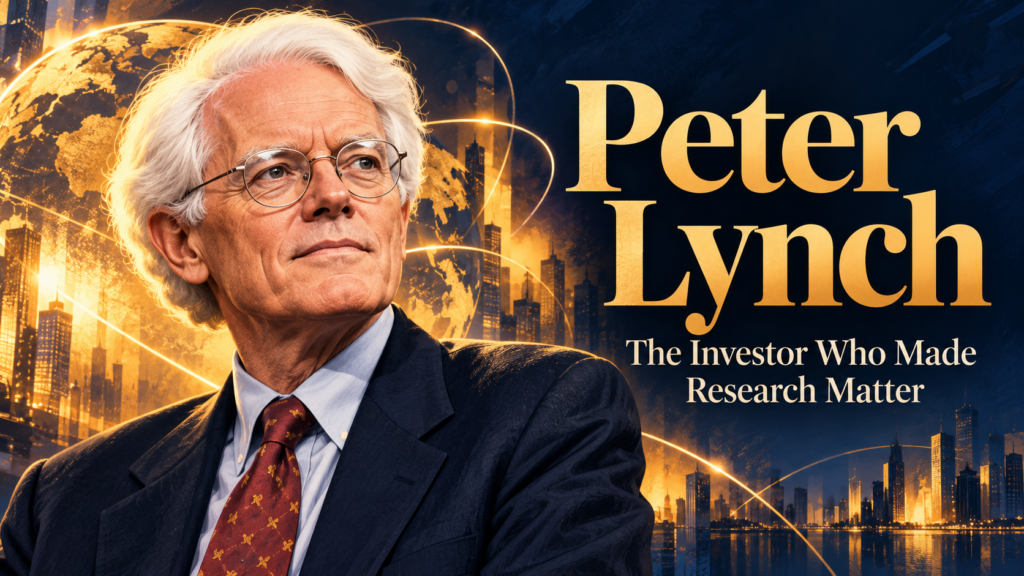
What Their Careers Reveal About Business Judgment
The comparison works best when their responsibilities remain clear. Lynch managed an investment portfolio. Catz helped manage a global technology company.
An investor can sell shares when expectations change. An executive must address problems inside the organization. Employees, customers, contracts, and acquired businesses complicate those decisions.
Their achievements therefore require different measurements. Lynch’s fund returns belong to a defined historical period. Catz’s record includes leadership responsibilities, transactions, and corporate transformation.
Neither record justifies assuming every decision succeeded. Nor should company valuation be confused with personal wealth. This article avoids unsupported net worth estimates.
The shared lesson is narrower and more useful. Financial knowledge matters when paired with detailed business understanding. Impressive titles alone explain little about how decisions were made.
Beyond the Peak: Education, Philanthropy, and Strategic Influence
Lynch’s later public footprint includes substantial educational philanthropy. In 1999, Peter and Carolyn Lynch announced a gift exceeding $10 million to Boston College. Its education school subsequently received their names.
They committed another $10 million in 2010. That gift launched the Lynch Leadership Academy for school principals. [Insert Boston College Philanthropy Reference Link Here] Boston College
His contributions also reached the arts. Boston College announced a donation of thirty artworks in 2021. Their combined value exceeded $20 million. [Insert Boston College Museum Reference Link Here] bc.edu
Catz’s September 2025 transition preserved a strategic role at Oracle. Clay Magouyrk and Mike Sicilia succeeded her as CEOs. Oracle stated that she would continue helping oversee its direction. [Insert Oracle Leadership Reference Link Here] Oracle Middle East Regional
Their influence now extends beyond their best-known positions. Lynch’s work reaches investors, students, and cultural institutions. Catz’s experience remains connected to Oracle’s strategic leadership.
Lessons Worth Applying
- Research before deciding: Familiarity should begin investigation, not end it.
- Build useful expertise: Combine financial knowledge with industry understanding.
- Measure achievements carefully: Separate fund returns, company growth, and personal wealth.
- Think beyond titles: Education, succession, and philanthropy extend a career’s impact.
This biography draws on publicly available institutional records, published interviews, biographical references, and news reporting. It is intended solely for educational and informational purposes. Roles and other time-sensitive details may change.
