
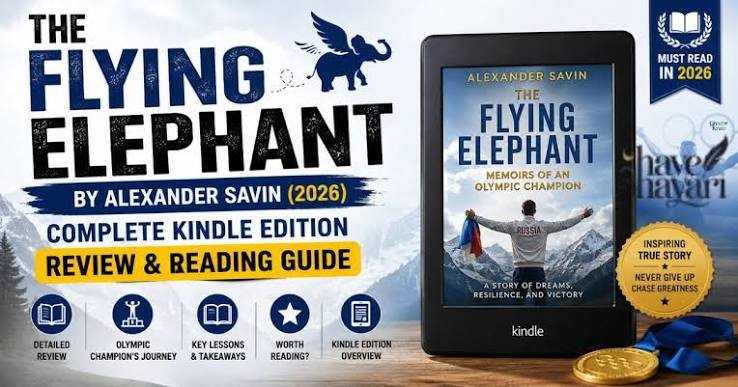

The Flying Elephant: Memoirs of an Olympic Champion brings Alexander Savin’s volleyball career into focus. The English Kindle edition turns a Soviet sporting past into a personal historical record.
Savin was part of the Soviet teams that won Olympic silver in 1976 and gold in 1980. His story also reaches beyond those two medals.
At a Glance
| Detail | Information |
|---|---|
| Full Name | Alexander Savin |
| Birth Year | 1957 |
| Birthplace | Taganrog, Russia |
| Profession | Former Soviet volleyball player |
| Playing Position | Middle blocker |
| Olympic Silver | Montreal 1976 |
| Olympic Gold | Moscow 1980 |
| Major Club | CSKA Moscow |
| Memoir | The Flying Elephant: Memoirs of an Olympic Champion |
| English Edition | Kindle edition |
| Published | October 26, 2025 |
| Reported Length | 514 pages |
| Archival Material | More than 240 photographs |
| Marriage Details | Not reliably verified |
| Family Details | Limited public information |
| Current Location | Not reliably verified |
The birth information is reported by multiple secondary sources. However, personal details about Savin’s private life remain limited.
What Is The Flying Elephant About?
The book is more than an Olympic medal story. It documents Savin’s experience inside Soviet volleyball.
Its strongest value comes from its historical perspective. Savin competed during a powerful period for Soviet volleyball.
The memoir also helps preserve memories of players and coaches from that era. That gives the book value beyond personal autobiography.
The English edition was released in Kindle format. Reports list the edition at 514 pages.
It also contains a large collection of archival photographs. These images add historical context to the written memories.
Alexander Savin Before Olympic Fame
Savin was born in 1957 in Taganrog. He later developed his sporting career within the Soviet system.
Available biographical accounts connect his development with Obninsk. He eventually reached the highly competitive CSKA Moscow environment.
That path mattered because Soviet volleyball demanded technical discipline. Players also faced intense competition for national-team places.
Savin eventually became a middle blocker. His position required timing, jumping ability, reading attacks, and strong blocking skills.
A contemporary Washington Post report described Savin as 6 feet 7 inches tall. It also highlighted his exceptional jumping ability.
The 1976 Olympics Changed His Story
Savin’s first Olympic medal came at the 1976 Montreal Games.
The Soviet Union reached the men’s volleyball final. Poland won the gold medal, while the USSR took silver. Savin was listed among the Soviet players.
That result became an important part of his Olympic journey. Four years later, the opportunity for redemption arrived.
The 1976 experience also shows why Olympic success rarely comes instantly. Savin had already reached the podium before winning gold.
Moscow 1980: The Olympic Gold
The defining Olympic moment came at the 1980 Moscow Games.
Savin represented the Soviet Union in the men’s volleyball tournament. The Soviet team won the gold medal.
The achievement came during an unusual Olympic period. Many countries boycotted the Moscow Games.
The United States was among the countries that stayed away. Despite that political backdrop, the tournament remained part of Olympic history.
Savin’s name therefore became linked with one of Soviet volleyball’s major successes.
A contemporary Sputnik archive identifies him as an Olympic champion. It also describes him as a leading player of the 1970s and 1980s.
His Impact Was Bigger Than Two Olympic Medals
Looking only at Savin’s Olympic record misses much of his career.
He was part of Soviet volleyball during a period of major international success. Research on elite Soviet volleyball specifically identifies Savin among its important middle blockers.
His reported international achievements include:
- 1976 Olympic silver
- 1980 Olympic gold
- 1978 World Championship gold
- 1982 World Championship gold
- Multiple European Championship titles
- World Cup victories
These achievements show sustained success rather than one isolated tournament.
That distinction is important when reading the memoir. Savin was not simply a former Olympic champion. He spent years competing at the highest level.
A Different Look at Soviet Volleyball
One interesting feature of Savin’s story is its historical setting.
Soviet sport operated within a highly organized system. Training, coaching, competition, and national representation were closely connected.
Volleyball was also part of the Cold War sporting landscape. International matches carried significance beyond the court.
Savin experienced that environment from inside the team. His memoir therefore has potential value for sports historians and volleyball researchers.
The book also preserves memories of people from that sporting generation. Andrei Savine described the English translation as a family project connected to his relationship with Savin.
The Translation Has Its Own Story
The English-language edition has an unusual background.
Andrei Savine described spending more than a year working on the translation. He worked with Alfredo Cabero and Ioulia Soudakova.
That detail adds another layer to the book.
The project was not simply about converting Russian text into English. It also became an effort to preserve sporting memories.
The translated edition reportedly includes archival photographs. It also carries endorsements from several volleyball figures.
This makes the English version particularly interesting for readers outside Russia.
Why The Kindle Edition Matters
The Kindle edition gives international readers easier access to Savin’s story.
Reported edition details include:
| Kindle Detail | Reported Information |
|---|---|
| Format | Kindle |
| Publication Date | October 26, 2025 |
| Length | 514 pages |
| Language | English |
| File Size | About 68.8 MB |
| Photographs | 240+ archival images |
| Page Features | Page Flip and Word Wise reported |
The large file size is understandable for a photograph-heavy sports memoir.
For readers interested in visual sports history, the photographs may be especially valuable.
What Makes The Flying Elephant Different?
The most interesting angle is not simply Savin’s Olympic gold.
It is the combination of sport, memory, and historical preservation.
Many athlete biographies begin with childhood and end with fame. Savin’s memoir appears more concerned with the people and experiences behind that fame.
That approach gives the book a wider purpose. It records a sporting generation that is gradually disappearing from living memory.
The translation project reinforces that purpose. Andrei Savine specifically described the work as preserving the legacy of people connected with Savin’s career.
What We Can Verify About His Private Life
Public information about Savin’s personal life is much thinner.
Reliable sources confirm his sporting career. They do not provide enough evidence for detailed claims about his marriage, spouse, children, or present-day residence.
For that reason, those details should not be presented as established facts.
Marriage: No reliably verified wedding information found.
Children: No reliable public record confirmed during research.
Current residence: Not reliably established.
Net worth: No credible public figure confirms an exact amount.
This distinction matters. A biography should separate documented achievements from internet speculation.
Is The Book Worth Reading?
For volleyball fans, the answer is particularly strong.
The memoir offers access to a player who experienced two different Olympic outcomes. He first won silver, then returned for gold.
It also provides historical value. Readers can explore Soviet volleyball through someone who actually competed inside that system.
The book may also interest:
- Volleyball players and coaches
- Olympic history enthusiasts
- Sports historians
- Readers interested in Soviet-era athletics
- Fans of athlete memoirs
- Readers studying Cold War sports history
Its biggest appeal is therefore not celebrity.
It is firsthand sporting memory.
Final Perspective
The Flying Elephant: Memoirs of an Olympic Champion deserves attention because Alexander Savin’s career connects several important stories.
There is the athlete who lost an Olympic final. There is the player who returned four years later. Then there is the veteran looking back on an entire sporting generation.
His 1980 Olympic gold is the headline achievement. Yet the deeper value lies in the memories surrounding it.
The English Kindle edition also gives those memories a wider audience. Its photographs and translation add historical depth.
Most importantly, the available evidence supports a careful conclusion: Savin’s legacy rests on sustained international success, not one Olympic victory alone.
Frequently Asked Questions
Who is Alexander Savin?
Alexander Savin is a former Soviet volleyball player. He competed as a middle blocker and became an Olympic champion. He won silver at Montreal 1976 and gold at Moscow 1980.
What is The Flying Elephant?
It is a memoir associated with Alexander Savin’s volleyball career. The book explores his sporting experiences and the Soviet volleyball world. The English edition is available in Kindle format.
When was the Kindle edition published?
The reported publication date is October 26, 2025. Available descriptions list the English edition at 514 pages.
Did Alexander Savin win an Olympic gold medal?
Yes. Savin was part of the Soviet men’s volleyball team that won gold at the 1980 Moscow Olympics. He had previously won Olympic silver at Montreal in 1976.
Is Alexander Savin’s net worth publicly known?
No reliable source establishes an exact net-worth figure. Any specific online estimate should therefore be treated as unverified.
Source Note
This article prioritizes verifiable historical information. Personal details were not added when reliable evidence was unavailable. Key research included contemporary reporting, Olympic records, sports research, archival material, and the memoir’s translation project.
Read more :Kim Kardashian Net Worth in 2026: The Business Empire Behind Her Fortune
